
October 2, 2026
When a family first starts searching for residential mental health treatment, most people picture the same thing: a hospital. Long hallways. Locked doors. Someone sitting in a room waiting for something to happen.
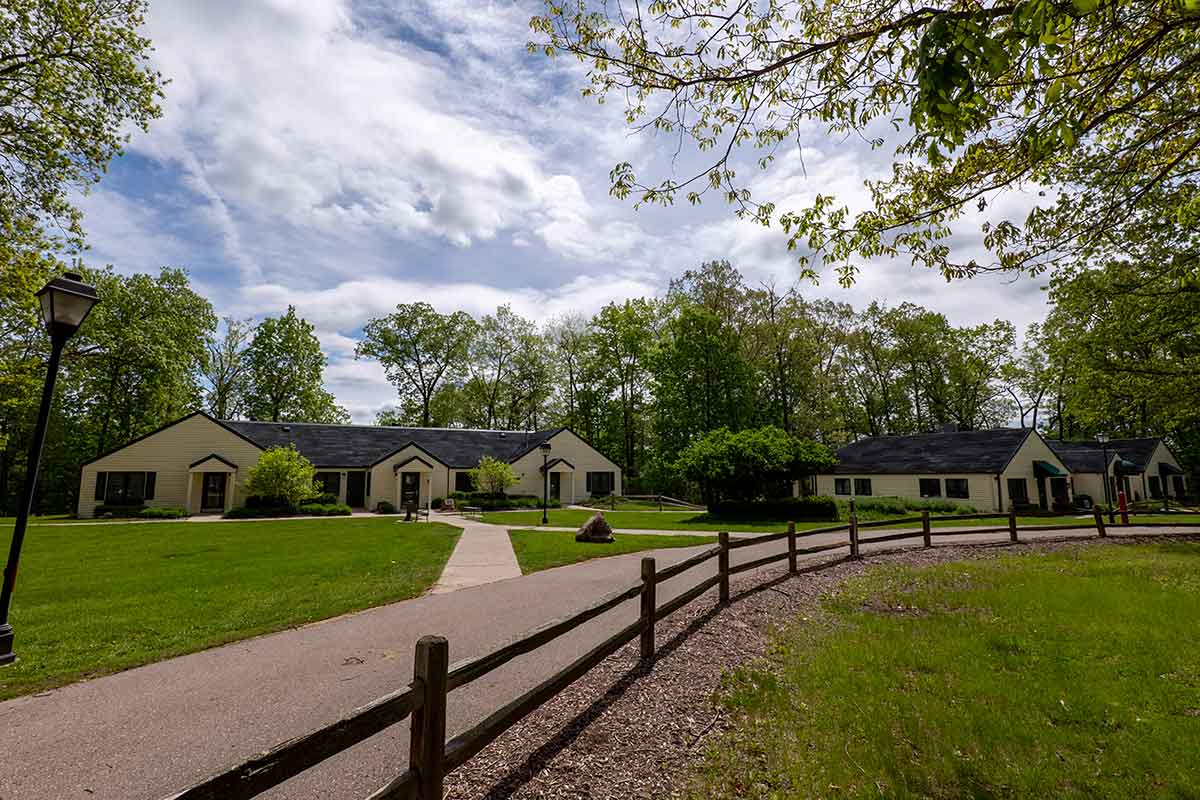
That picture is one of the biggest reasons families hesitate, and it isn’t what a day at Rose Hill Center looks like.
A day here is built around three things that research consistently links to recovery from serious mental illness: consistent daily structure, a coordinated clinical team, and meaningful work. Here’s what each one looks like in practice, and why it matters.
Mornings: restoring rhythm
Serious mental illness erodes routine. Sleep cycles invert, meals get skipped, days blur together. So one of the first things treatment restores is a predictable rhythm, waking at a consistent time, getting ready for the day, eating breakfast alongside other people.
This sounds almost too simple to matter. It matters more than most families expect. Researchers describe daily routines as social zeitgebers — time cues that keep the body’s internal clock steady — and therapies built on rebuilding those routines aim to change the underlying biological processes that keep mood instability going. [pmc.ncbi.nlm.nih.gov]
The evidence is real. In a two-year trial of interpersonal and social rhythm therapy, patients who worked on stabilizing their daily routines went significantly longer without a recurrence of symptoms. A larger multi-site study found that people receiving intensive, structured psychotherapy were substantially more likely to recover and stay well than those receiving brief care. [psychhq.com] [psychhq.com]
Structure isn’t rigidity for its own sake. It’s a treatment mechanism — and it’s one of the few that a person can carry home with them.
Through the day: a team working from one plan
In outpatient care, treatment is an hour on a calendar, and the psychiatrist, therapist, and family often never speak to one another. Here, individual therapy, group work, psychiatric care, and medication management are woven through the day and coordinated by a team that meets about the same person.
That coordination is the real difference. Everyone is working from one treatment plan and one set of goals, so when something isn’t working — a medication side effect, a skill that isn’t sticking, a setback at home — the response comes in days rather than at the next available appointment.
Families notice this too. They’re not left assembling a picture from four different providers.
Afternoons: work that means something
This is where a day at Rose Hill looks least like a hospital. Residents take part in vocational and work programs across the campus — hands-on activity with a real result at the end of it.
The purpose isn’t to keep people occupied. It’s that meaningful work rebuilds something illness takes away: the sense of being capable. And of everything in this article, this is the piece with the strongest research behind it.
A meta-analysis of randomized trials found that people with serious mental illness enrolled in evidence-based supported employment were substantially more likely to obtain competitive employment than those in traditional vocational services. A six-country European trial reached the same conclusion. A large Danish study found the advantage held two and a half years later — more people working or in school, more weeks worked, and fewer outpatient visits along the way. Across dozens of trials, the pattern repeats. [journals.plos.org] [thelancet.com] [pmc.ncbi.nlm.nih.gov] [ipsworks.org]
Alongside that work, residents practice the ordinary skills independent living requires — cooking, laundry, managing money, keeping a space, taking medication without a reminder. Practicing these with support, before they’re needed, is what makes independence achievable later.
Evenings: rest and other people
Treatment doesn’t run until lights out. Evenings make room for downtime, shared meals, recreation, and the company of people who understand what this is like — the part residents most often say they didn’t expect and needed most.
The isolation that comes with serious mental illness is its own injury. Living among people working toward the same thing begins to undo it.
What families should take away
We won’t tell you that residential care is the right answer for everyone. It isn’t, and the honest research on treatment settings is more nuanced than any brochure suggests.
What we can tell you is what a day here is made of, and why it’s built that way. Steady routine, a team that communicates, and work that matters — these are the ingredients recovery research keeps pointing back to, and a residential setting is simply a place where all three can happen at once, every day, with support close by.
If you’re weighing this decision for someone you love, you don’t have to picture it alone. Our admissions team will walk you through what a week here actually looks like and help you think through whether it’s the right fit — including when it isn’t.